Why Virtual Staging Falls Short in Real Life
Virtual staging has become a popular tool in real estate marketing. It’s fast, cost-effective, and visually appealing. With a few clicks, a digitally staged image can turn an empty room into something that looks stylish and livable. But here’s the reality: virtual staging alone does not sell homes. For sellers wondering whether staging is worth the effort in the first place, we took a closer look at whether staged homes actually sell for more, and what the data says.
Although much of the industry is rushing to adopt virtual and AI staging as a budget-friendly way to enhance listing photos, experienced professionals and trusted industry sources warn that this approach often falls short where it matters most, during in-person showings. Virtual images may attract online attention, but they rarely provide the tangible, emotional connection buyers need to move forward with confidence. As Better Homes & Gardens notes, while virtual staging can improve online appeal, buyers may feel disappointed when a home doesn’t match their expectations in person, reinforcing why traditional staging continues to outperform digital alternatives.
The Expectation Gap: How Virtual Staging Can Disappoint Buyers
One of the biggest risks of virtual or AI staging is the expectation gap it creates between what buyers see online and what they experience in person. Buyers often form strong emotional impressions based on polished listing photos, mentally placing themselves in a space before ever scheduling a showing. When they arrive, and the home doesn’t align with those expectations, whether it feels smaller, darker, less updated, or simply different, that emotional momentum is immediately disrupted.
Even subtle mismatches can introduce doubt, making buyers question the accuracy of the listing and hesitate at the exact moment interest should be peaking. When expectations aren’t met, enthusiasm cools, decision-making slows, and offers may become more conservative or fail to materialize altogether, often resulting in longer days on market and reduced negotiating leverage for sellers.
Buyer Trust and Home Staging: Why Authenticity Wins
Today’s buyers are more informed than ever. With constant exposure to professionally edited content online, many instantly recognize virtual or AI staging, which can raise questions about what else in the listing may be digitally enhanced or misrepresented. In a transaction that is both financial and deeply emotional, trust matters far more than perfection. Prospective purchasers need to feel confident that what they see online reflects what they will experience in person. Homes that feel honest, well-cared for, and thoughtfully prepared through real-world steps consistently perform better. Over-styled or heavily altered images can create skepticism, while authentic preparation builds confidence and helps buyers move forward with clarity and conviction.
Virtual Staging Can’t Create Real Atmosphere
Virtual staging may place furniture in a room, but it cannot create atmosphere. It doesn’t accurately convey warmth, true scale, natural light, or how a space flows and lives from one room to the next. Buyers don’t purchase photos; they respond to how a home feels when they stand inside it. Physical staging, thoughtful styling, proper lighting, and professional photography work together to create that experience. This is something virtual images simply cannot replicate.
What Works Better? Quality Home Staging for Selling Your Home
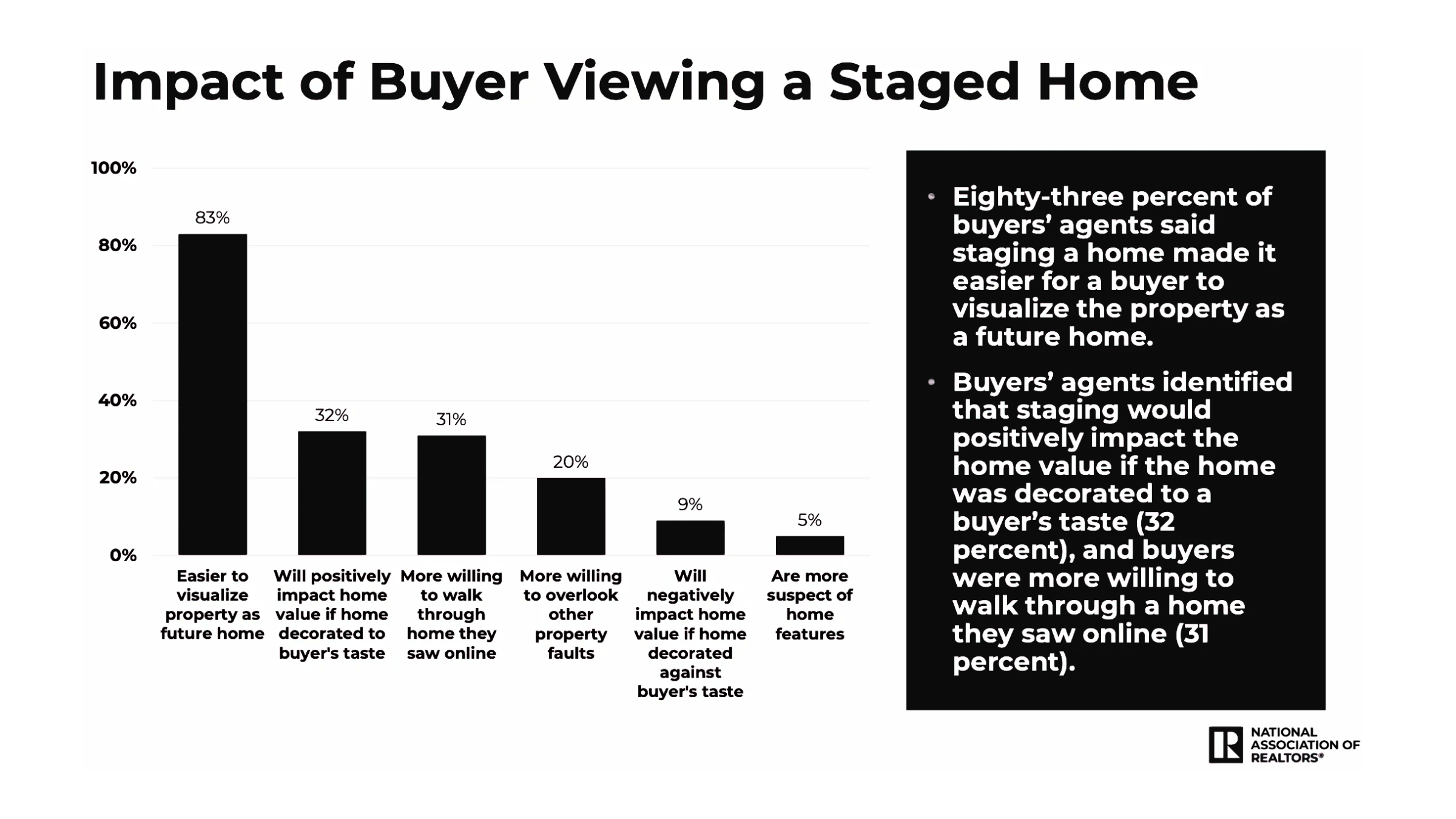
According to NAR’s “2025 Profile of Home Staging” report, the value of staging continues to be reinforced by real-world results across the industry.
- 83% of buyers’ agents reported that staging made it easier for buyers to visualize a property as their future home. This is often a critical step in moving from interest to offer!
- About three out of 10 real estate agents reported a 1% to 10% increase in home value directly attributed to staging.
- Roughly 30% of listing agents observed a reduction in days on market, reinforcing staging’s role in creating early momentum and buyer confidence.
As homebuyers increasingly discover properties online, presentation has become a critical factor in the selling process. In Staging to Sell: The Real Estate Shift Toward Picture-Perfect Homes, REALTOR® Magazine highlights how professionally staged homes help buyers form emotional connections and visualize themselves in a space. This emphasis underscores a preference for authentic, in-person presentation; something virtual or AI-generated staging struggles to replicate, particularly when buyers encounter discrepancies between online images and the actual home.
How We Help Sellers Stand Out and Sell With Confidence
This philosophy is reflected in how we serve our clients. We provide complimentary home staging for both occupied and vacant homes, along with strategic guidance on updates and renovations that can impact value. Each listing receives a custom staging plan created by our certified in-house staging coordinator, ensuring the home is presented to highlight its strongest features and appeal to today’s buyers. From selecting paint colors, tile, and flooring to fully staging vacant properties with our curated furniture inventory, our goal is simple: to present homes authentically, build buyer trust, and position our clients to achieve the highest and best offers in the shortest amount of time.
Wondering how much your Boise home is worth in today’s market? Get an instant property value to see how current market conditions, recent sales, and buyer demand may impact your home’s price. It’s a quick, easy way to start planning your next move with confidence.